Escaping the Silo Trap: How Unified Commerce Is Reshaping Retail Inventory and Experience


Retail has spent the last decade accumulating systems.
New sales channels, platforms, and data sources—each introduced to solve specific challenges or seize new opportunities. On paper, this should have created smarter, more responsive retail operations. In practice, it often resulted in complexity without clarity.
In conversations with retail business leaders, a familiar pattern emerges. Inventory exists everywhere—from retail stores to online sales channels—yet rarely feels fully visible or synchronized. Customer experiences are thoughtfully designed but struggle to remain consistent across digital and physical channels. The issue isn’t ambition or investment—it’s fragmentation. And for many retailers, that fragmentation has quietly compounded into technical debt that now stands between them and the agility they need.
Unified commerce platforms integrate sales channels, inventory management, order fulfillment, and marketing activities, providing a single view of inventory, orders, and customer data in real-time. It has become the quiet differentiator separating retailers that move with confidence from those that hesitate at every decision point.
Inventory Management Is No Longer an Operations Problem
Inventory management has traditionally lived deep within operations, far from the customer experience. Today, that boundary has disappeared.
More than 60% of businesses still prioritize reducing stockouts as their top inventory optimization goal, yet about three-quarters of retailers struggle to connect online and offline transaction data. Inventory is tracked but not synchronized across sales channels, and availability is calculated without real-time sharing.
This creates an “inventory blind spot” that influences decisions throughout the retail business. Promotions launch without fulfillment flexibility, demand forecasting suffers due to delayed signals, and lost sales appear as missed opportunities rather than clear failures.
In Dualboot’s experience working with retailers and global manufacturers, closing this gap rarely requires replacing systems. Instead, it starts with integrating them. When inventory records, logistics, and fulfillment data are unified through a retail inventory management system enhanced by modern data engineering and business intelligence layers, planning becomes dynamic rather than reactive.
In one such engagement, integrating fragmented data sources into a single operational view led to a 27% improvement in supply chain performance. Not because the business changed its strategy—but because it finally saw itself clearly.
Unified Commerce Lives or Dies at the Customer Experience Layer
Customers don’t think in channels. They think in brands.
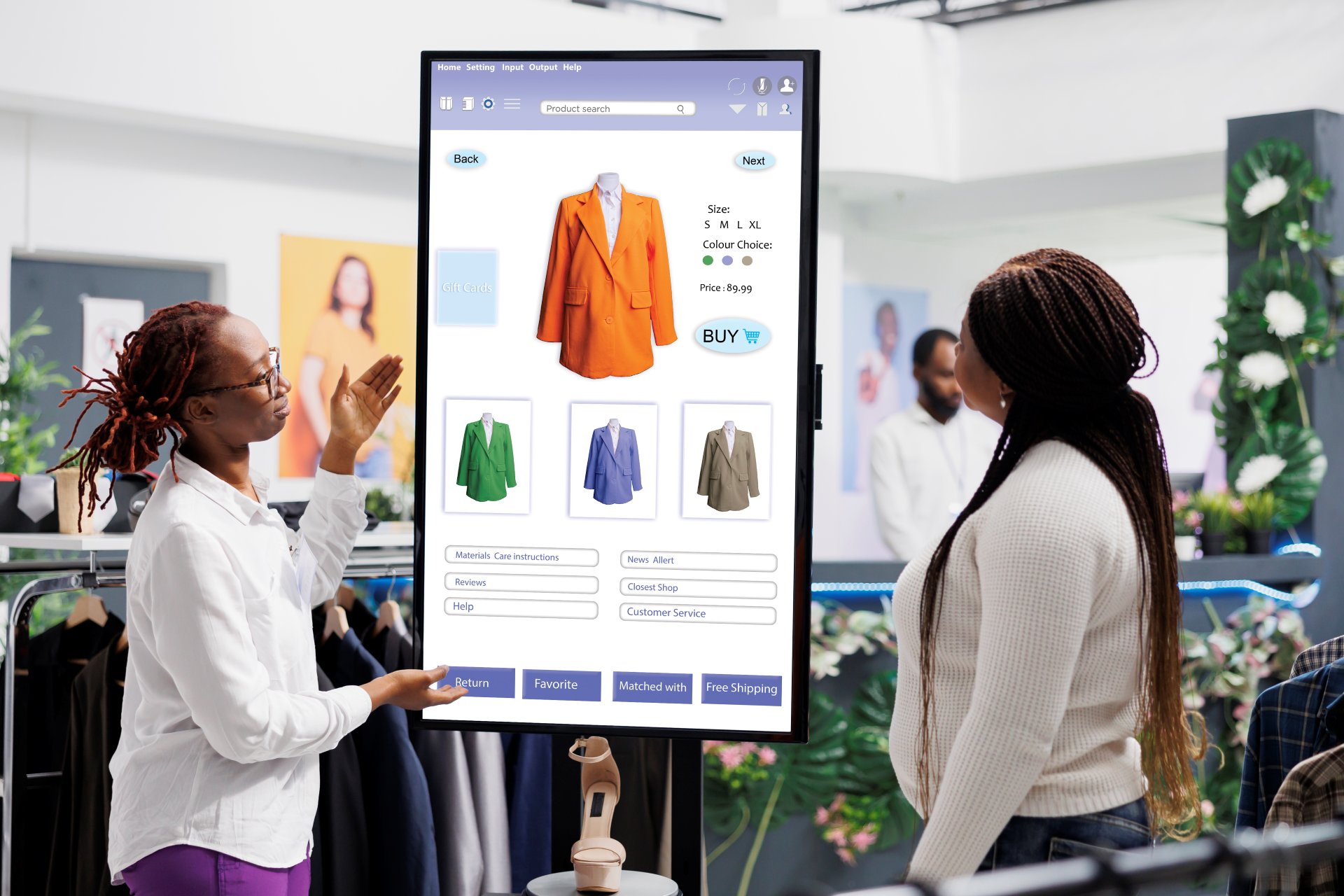
They expect a seamless and consistent experience whether shopping online, visiting a physical store, or returning a product purchased through online and offline channels. Pricing, product availability, loyalty rewards, and customer service should feel integrated—because from their perspective, it is.
Internally, however, many retailers still treat digital and physical commerce as separate business processes. E-commerce platforms evolve rapidly, while brick-and-mortar systems often lag behind. This lack of seamless integration becomes apparent in key moments: click-and-collect, cross-channel returns, and in-store digital engagement.
Dualboot approaches unified commerce by designing retail inventory management systems and eCommerce platforms as interconnected ecosystems rather than isolated touchpoints. The goal isn’t to optimize channels independently but to evolve them together around a unified customer and inventory view, improving operational efficiency.
Speed plays a critical role here. Through Dualboot’s DB90 ecosystem, retailers can move from concept to clickable prototypes and production-ready MVPs for new omnichannel capabilities—such as in-store mobile experiences or smarter fulfillment flows—in as little as 90 days. This velocity allows teams to learn from real customer behavior without waiting for monolithic platform upgrades or large-scale system replacements.
Legacy Systems Are Only a Liability If You Treat Them Like One
Nearly every retail organization relies on legacy systems that still run critical parts of the business. These platforms hold years of embedded logic, operational nuance, and institutional knowledge. Replacing them outright is rarely practical—and often unnecessary.
The real constraint isn’t age. It’s opacity.
When data and logic remain confined within outdated codebases, innovation slows down, AI initiatives stall, and even minor changes become risky due to a lack of visibility into system behavior under pressure.
Instead of opting for a full “rip and replace,” Dualboot adopts a modernization-first strategy centered on comprehensive understanding. Utilizing 3PO, its proprietary AI-powered ingestion engine, legacy systems—including code, documentation, workflows, and dependencies—are holistically analyzed. This process provides clarity on what components to preserve, evolve, or decouple over time.
This enables retailers to modernize backend systems such as ERPs and inventory management software incrementally, preserving effective elements while enhancing performance, scalability, and data accessibility. Modernization becomes a controlled evolution that supports effective inventory management and operational efficiency, rather than a disruptive reset.
Moving AI From Experimentation to Everyday Advantage
AI is no longer optional in retail strategy. Dynamic pricing, intelligent product discovery, and personalized experiences are widely understood as competitive necessities.
Yet many retailers remain stuck in experimentation. Pilots launch. Proofs of concept show promise. Scaling never quite happens.
The blocker is rarely the model—it’s the foundation beneath it.
AI depends on clean, connected data and systems designed to adapt. Foundational elements like sales data, customer data, and inventory data are essential for effective AI-driven decision-making, enabling retailers to optimize demand forecasting, personalize experiences, and improve operational efficiency. Without accurate inventory data across all channels, even the most advanced algorithms struggle to deliver consistent ROI. This is why Dualboot integrates AI directly into the product lifecycle rather than treating it as a standalone initiative.
From smart matching and pricing tools to adaptive merchandising and discovery, AI becomes most powerful when it operates where decisions are already being made. When systems are unified and modernized, AI stops being an experiment and starts compounding value over time.
The Future Belongs to Retailers Who Move With Velocity
As retail looks beyond 2026, the defining advantage won’t be scale alone—it will be speed with intent. Retailers adopting unified commerce can experience revenue growth that is 3 to 6 times higher than traditional retail strategies.
Companies with strong omnichannel retail approaches retain nearly 90% of their customers, compared to about one-third for those with weaker strategies. This gap continues to widen as customer expectations and preferences evolve across multiple channels.
The retailers best positioned to succeed focus on unifying inventory management before expanding sales channels. They design seamless customer journeys that bridge digital and physical experiences, modernize legacy systems without losing valuable business logic, and embed AI-driven inventory management tools that continuously enhance operational efficiency and customer engagement.
This is where Dualboot positions itself—not simply as a development partner, but as a digital impact partner. Through unified commerce platforms, modern data engineering, pragmatic legacy modernization, and the DB90 ecosystem, retailers can move faster with less risk and greater clarity.
Because in the future of retail, the advantage won’t come from having more systems.
It will come from finally making them work together.
FAQs
What is the difference between unified commerce and omnichannel retail?
Omnichannel retail focuses on connecting different customer-facing channels, such as online, mobile, and in-store, to create a consistent experience.
Unified commerce goes further by integrating all backend systems—inventory, orders, and customer data—into a single platform with real-time synchronization. The result is not just a connected experience, but a single source of truth that eliminates data silos and enables more accurate, seamless interactions across every touchpoint.
What technology infrastructure is required to implement a unified commerce strategy?
A unified commerce strategy relies on a centralized architecture where core systems are fully integrated. This typically includes a unified commerce platform, centralized order and inventory management, and a shared customer data layer.
The key is real-time data synchronization across all channels, allowing every system to operate from the same information. Instead of stitching together multiple disconnected tools, unified commerce depends on tightly integrated systems that support consistent operations and personalization at scale.
How long does a unified commerce implementation typically take for a mid-size retailer?
Implementation timelines can vary, but for a mid-size retailer, unified commerce typically takes several months to over a year. The timeline depends on factors like the number of legacy systems involved, the complexity of integrations, the quality of existing data, and the scope of the rollout.
Because unified commerce affects both technology and operations, many organizations take a phased approach, gradually replacing or integrating systems to reduce risk while maintaining business continuity.


Related Posts