Supply Chain Visibility Starts at Tier 2: Why Most Manufacturers Are Flying Blind


Most manufacturers have a reasonable picture of their direct suppliers. Lead times, performance scores, contract terms — all tracked. What they don’t see is everything that happens one or two tiers deeper. That’s where actual risk lives.
An estimated 43% of organizations have limited or no supply chain visibility beyond Tier 1 suppliers¹. Nearly half of all manufacturers are operating with a partial map of their own supply chain. When a sub-tier supplier goes down, they don’t find out through an alert or a dashboard. They find out when a production line stops.
Why Multi-Tier Supplier Visibility Is So Hard to Achieve
Most supply chain teams know they need deeper visibility and that the gap is structural.
ERP systems are built around internal operations: purchasing orders, inventory levels, financial flows. They don’t extend to supplier-of-supplier relationships. Logistics platforms track shipments, not origin risk. Procurement tools manage contracts, not sub-tier capacity.
On the supplier side, many Tier 2 and Tier 3 partners don’t have the digital infrastructure to share real-time data. They’re running on spreadsheets, email threads, and legacy systems that weren’t designed for integration. Connecting them to a visibility platform takes enablement work, not just a software decision.
The result is a supply chain that looks connected on paper and is fragmented in practice.
The Real Problem: ERP, Logistics, and Supplier Data in Silos
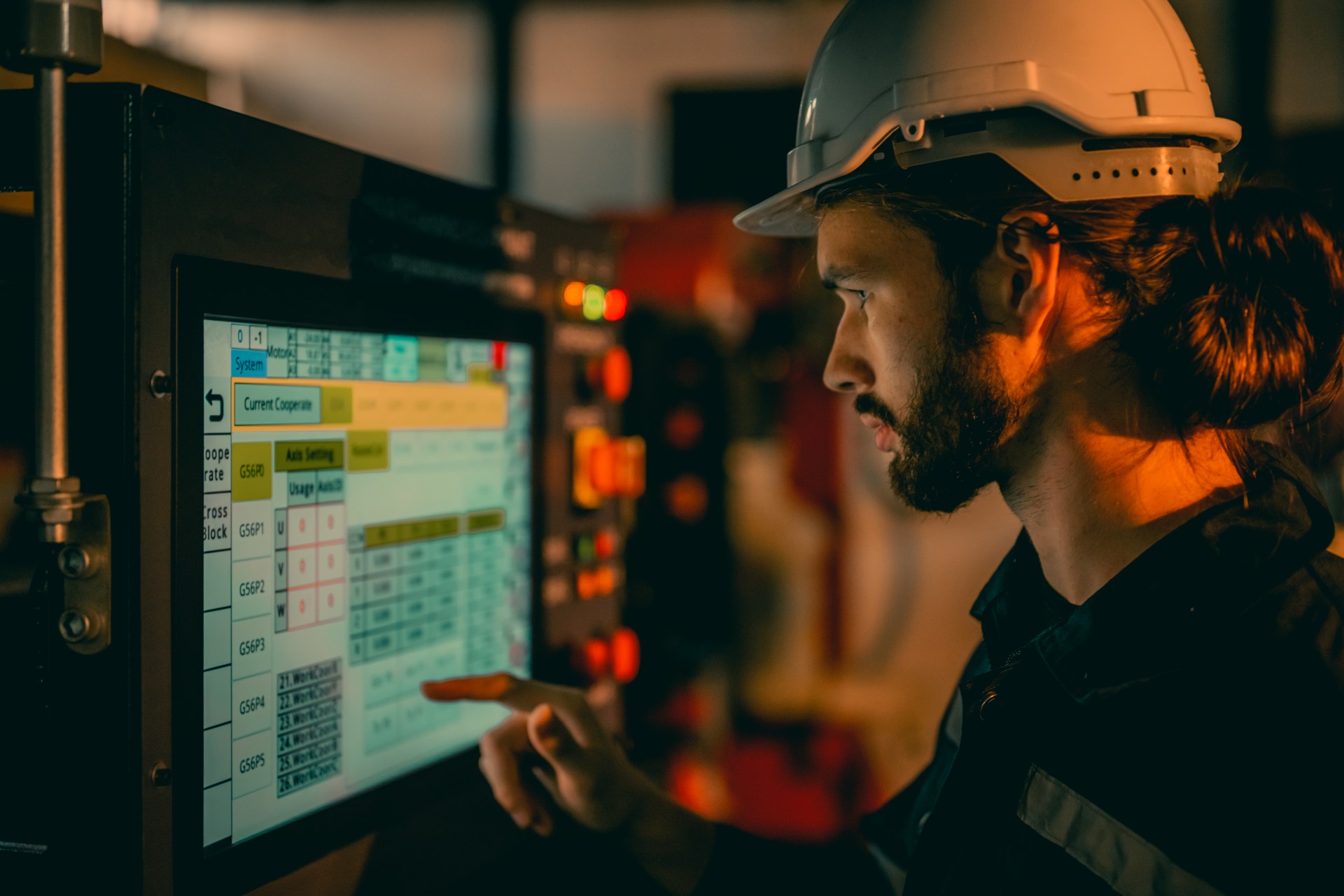
Walk through a typical manufacturer’s tech stack, and you’ll find ERP data in one place, logistics data in another, supplier scorecards in a third, and IoT signals from the factory floor somewhere else. Each system tells part of the story, but none of them connect automatically.
When data lives in silos, teams spend time reconciling information instead of acting on it. By the time a procurement analyst pulls together supplier lead time data, checks it against inventory levels, and cross-references logistics delays, the disruption has already hit. The architecture is the problem, and ERP integration is the first thing that has to change.
What Reactive Supply Chain Management Actually Costs
The cost of delayed disruption response rarely shows up in a single line item. It appears as expedited freight when a shipment gets rerouted last minute, often at 4x to 6x standard rates. It shows up as production slowdowns when a sub-assembly doesn’t arrive on time, and as missed delivery commitments with their own downstream consequences.
Companies without multi-tier supplier visibility don’t just react more slowly; they pay more to recover. Emergency supplier qualification takes weeks. Customer trust, once broken, takes longer to rebuild.
What End-to-End Supply Chain Visibility Actually Requires
Real supply chain visibility isn’t a dashboard upgrade. It requires three things working together:
- A unified data layer that integrates ERP, logistics platforms, supplier portals, and IoT signals into a single source of truth
- Real-time data flows instead of batch exports that are already stale by the time they surface an issue
- Predictive analytics that flag risk signals before they become disruptions. Not “here’s what happened,” but “here’s what’s likely to happen next week.”
Most manufacturers have pieces of this. Few have all three integrated end to end.
How ready is your business for AI?
Take our 5-minute assessment for an honest read on where you stand — and where the fastest wins are.
Building a Unified Supply Chain Data Layer with DataOps
A DataOps architecture for supply chain connects disparate systems (ERP platforms, logistics tools, supplier portals, factory floor sensors) into a single pipeline with consistent data models. This isn’t about replacing existing systems, but making them work together.
The architecture defines how data flows between systems, how it’s cleaned and normalized, and how it’s stored to support real-time querying. When done well, teams get a unified view of supplier health, inventory position, and logistics status without switching between tools. That consistency is what makes everything downstream — reporting, alerting, predictive modeling — actually reliable.
Supply Chain Control Towers: Beyond Standard Reporting
A supply chain control tower is different from a standard reporting dashboard. A dashboard shows what happened. A control tower shows what’s happening now, flags what’s likely to happen next, and provides the context to act before it becomes a problem.
In practice: real-time risk signals tied to supplier health scores, disruption alerts based on predefined thresholds, and scenario modeling that lets teams test responses before committing. Instead of discovering a Tier 2 supplier missed a shipment after the fact, a control tower surfaces the early indicators (capacity constraints, regional logistics delays, weather events) and connects them to specific production dependencies. That connection between external signal and internal impact is what makes supply chain analytics actionable.
Start Building Multi-Tier Supply Chain Visibility Without a Multi-Year Program
The trap most organizations fall into is trying to solve everything at once (full integration across all tiers, all systems, all suppliers) and ending up with an 18-month roadmap that never ships.
A more practical path: Start with Tier 1 data unification. First, get ERP, logistics, and procurement data into a single architecture. That alone surfaces insights that aren’t visible today. From there, identify the two or three highest-risk Tier 2 suppliers and instrument them first. Build data-sharing agreements, set up basic feeds, and integrate incrementally.
This delivers value faster and builds an architecture that scales without a complete rebuild.
Ready to Close the Supply Chain Visibility Gap?
Dualboot builds DataOps architectures and supply chain control towers that give manufacturers real-time visibility across every tier, from ERP integration to predictive disruption alerts.
If you’re ready to move from reactive to predictive, let’s talk.
¹ Source: KPMG, Supply Chain Trends


Related Posts