Low-Code/No-Code vs. Traditional Development: Speed Without Losing Control


Application development was once the exclusive domain of experienced software engineers. Building an application required deep knowledge of programming languages, system architecture, deployment pipelines, and testing methodologies. While software systems have only grown more complex, access to building them has dramatically expanded.
Today, non-technical teams can create functional applications without fully understanding the underlying systems that power them. A growing ecosystem of platforms offers pre-built components, templates, and integrations. Low-code and no-code tools—and more recently, AI-assisted approaches—make it possible to assemble applications quickly, often with minimal traditional engineering effort.
This shift has unlocked speed and experimentation. But accessibility doesn’t eliminate complexity; it often just delays it. At Dualboot, we frequently work with teams who optimized early for velocity and later found that the foundations they built on weren’t designed to support real scale.
What Is Low-Code / No-Code Development?
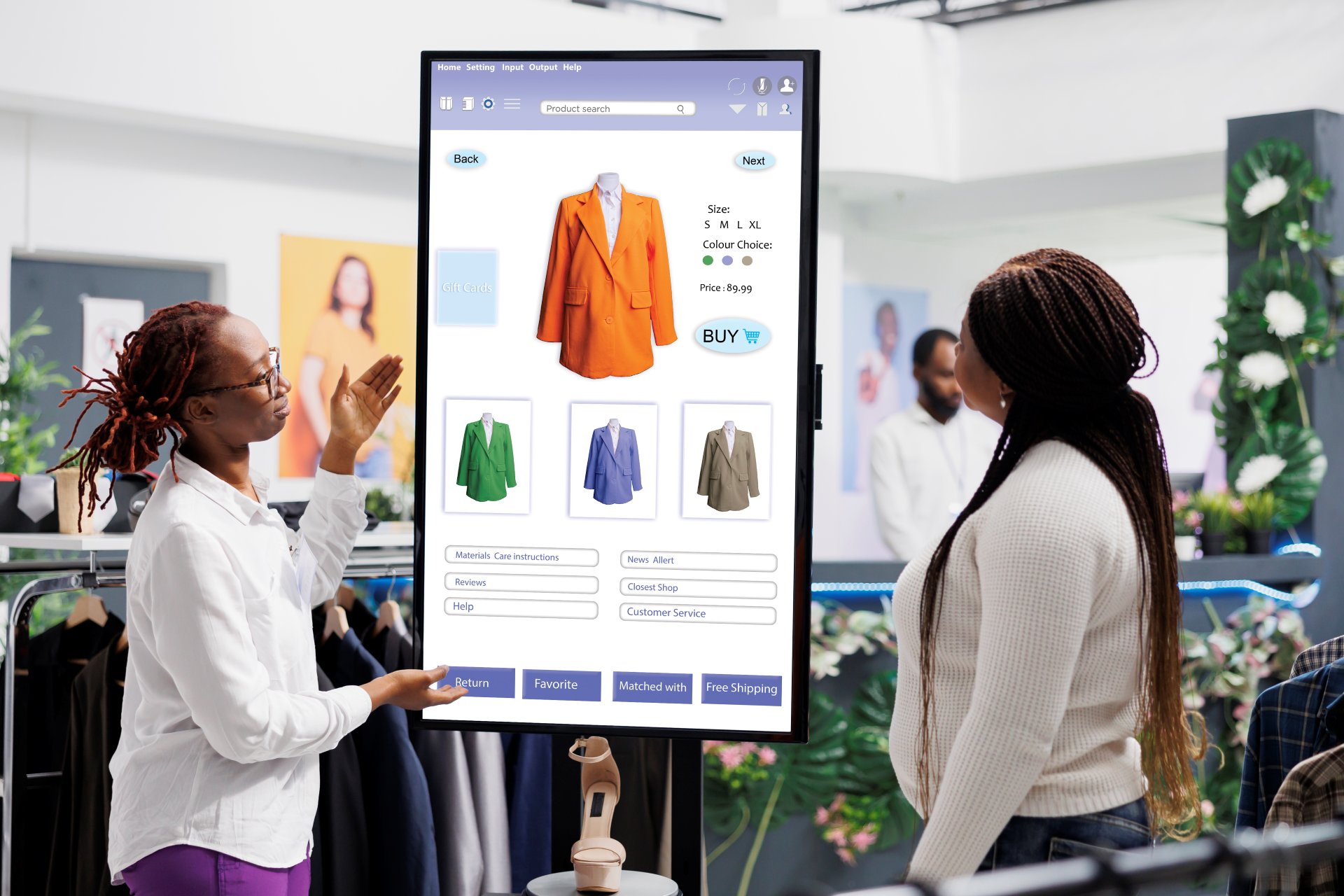
Low-code and no-code development—sometimes referred to as point-and-click development—uses graphical user interfaces (GUIs) that allow users to assemble applications by dragging and dropping pre-built components. These components are configured visually and connected into workflows, while the platform manages the underlying code and infrastructure.
This approach lowers the barrier to building digital products. Entrepreneurs, operators, and business teams can prototype, test, and deploy applications without deep engineering expertise. In the right context, this makes experimentation faster and reduces the cost of validating new ideas.
Low-Code vs. No-Code: What’s the Difference?
While often grouped together, low-code and no-code serve different audiences:
Low-code platforms target users with some technical knowledge. Developers use them to accelerate delivery by abstracting repetitive tasks while still extending functionality where needed.
No-code platforms are designed for non-technical users, offering a fully abstracted environment where applications can be built without writing code.
Both prioritize speed—but they do so by introducing constraints that become more visible as requirements grow.
Where Low-Code / No-Code Works Well
Low-code and no-code tools are particularly effective for:
Rapid prototyping and early validation
Internal tools that don’t justify long-term engineering investment
Short-lived workflows or operational experiments
Early proofs of concept where learning matters more than longevity
In these scenarios, speed is the advantage—and the trade-offs are usually acceptable.
The Limits Teams Often Encounter
The promise of low-code/no-code is fast progress. The reality is that this speed is usually confined to version 1.0.
These platforms provide power within guardrails. As products evolve, teams often run into limitations:
Constrained customization — you can only build what the platform supports
Platform dependency — infrastructure, pricing, and scalability are outside your control
Rebuild risk — when the platform can’t support growth, teams are forced to start over
Lost momentum — success exposes architectural limits at the worst possible moment
This pattern is becoming increasingly common as teams push early prototypes into real products.
Low-Code, AI, and the Rise of “Vibe-First” Development
Many of the same dynamics now appear in newer AI-driven approaches often described as vibe coding—where teams rely on loosely defined prompts and AI-generated code to move quickly.
Like low-code/no-code, vibe-first development can feel incredibly productive early on. But speed without structure introduces risk. When architecture, data flows, and system boundaries aren’t intentionally designed, complexity accumulates invisibly until it becomes expensive—or impossible—to unwind.
The issue isn’t the tools themselves. It’s building without clear intent, ownership, and architectural accountability.
Why Traditional Development Still Matters
Traditional software development requires more upfront investment, but it provides something abstraction-heavy approaches cannot: control.
Experienced developers don’t just write code—they design systems. They anticipate change, plan for scale, and make trade-offs explicit rather than hidden behind tools or generated output. That intentionality is what allows products to evolve without constant rewrites.
This doesn’t mean every project must start with a fully custom build. But for products that are core to your business, differentiation, or long-term growth, owning the architecture and codebase is often what protects momentum instead of slowing it down.
A More Intentional Path Forward
The most effective teams don’t treat low-code, AI, or traditional development as binary choices. They use abstraction strategically—prototyping fast, learning early, and committing to engineered systems once direction and value are clear.
At Dualboot, we help teams move quickly without sacrificing clarity. The goal isn’t just to build fast—it’s to build with intent, ensuring that early speed doesn’t undermine long-term scalability.
Your product reflects your vision, your market understanding, and your execution. Tools can accelerate that journey—but ownership, structure, and discipline are what allow it to last.
FAQs
What are the main differences between low-code platforms and traditional software development?
- Development speed: Low-code/no-code enables faster builds through visual tools; traditional development requires manual coding.
- Skill requirements: Low-code/no-code lowers the technical barrier; traditional development depends on experienced engineers.
- Flexibility & customization: Traditional coding offers full control; low-code/no-code is limited by the platform.
- Scalability: Traditional development scales more reliably for complex, long-term systems.
When should a company use low-code/no-code instead of traditional development?
Low-code/no-code is a strong choice when speed matters most—such as for rapid prototyping, internal tools, or early validation with limited engineering resources. Traditional development is better suited for products that require deep customization, complex integrations, or long-term scalability.


Related Posts