The Factory Floor Knows Everything. Your Supply Chain Knows Almost Nothing.


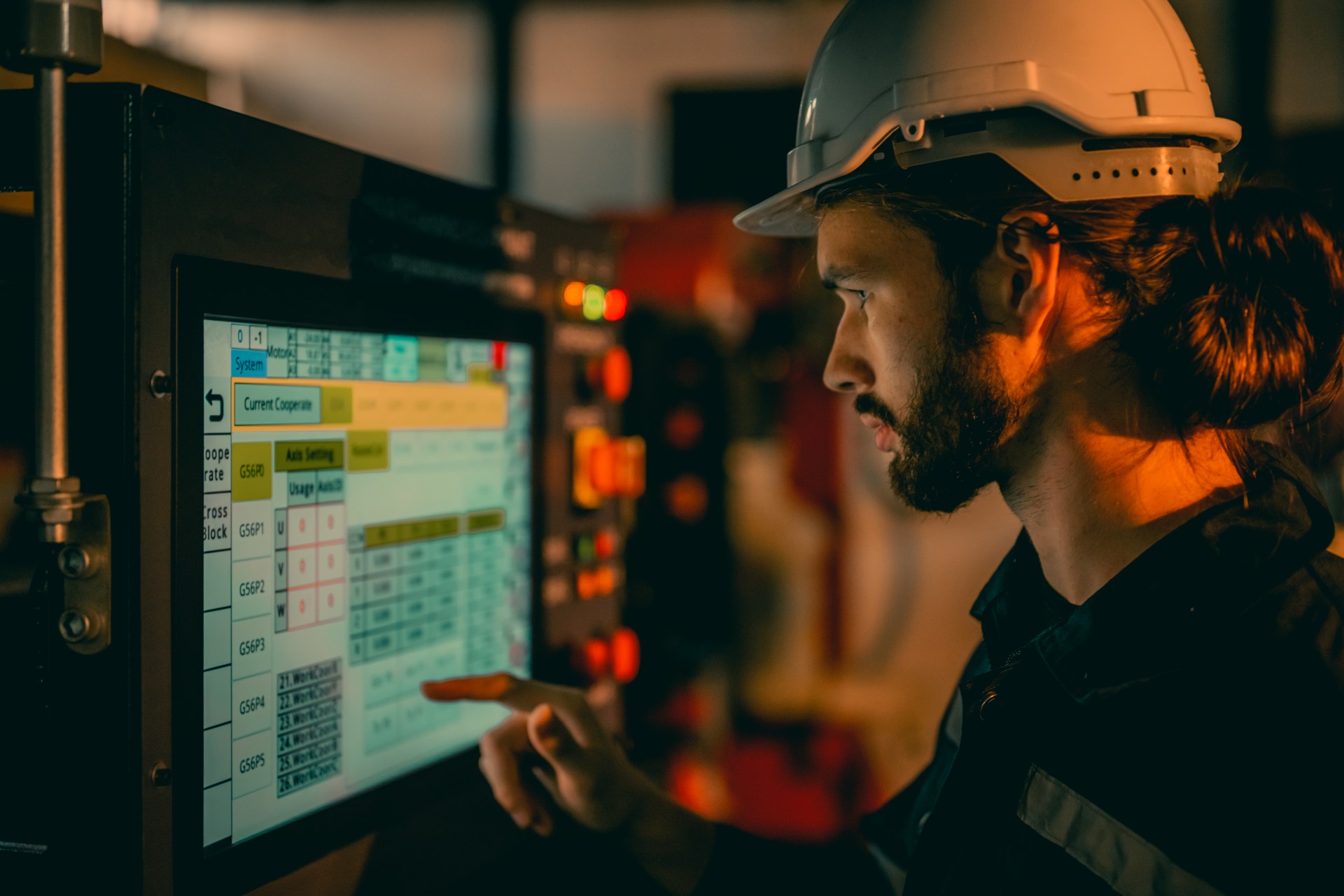
Most manufacturers today have more sensors, machines, and connected equipment than ever before. PLCs log every production cycle. Robotics systems record downtime to the millisecond. IoT devices track temperature, pressure, and throughput across the floor in real time.
And most of that data never reaches the people who need it.
This is the central paradox of modern manufacturing: the factory floor is the most data-rich part of the supply chain, and also the least connected. Not because the data doesn’t exist. Because it has nowhere to go.
Two Systems That Were Never Meant to Talk
The disconnect sits between two worlds that grew up separately.
- Operational Technology (OT): SCADA, PLCs, and MES—built for reliability and deliberately isolated, using industrial protocols and legacy hardware.
- Information Technology (IT): ERP, cloud, and BI tools—prioritizing openness and interoperability, expecting structured data via APIs. IT doesn’t naturally “speak” Modbus or handle raw PLC signals.
So what fills the gap? Manual work. Someone pulls a report, exports it to a spreadsheet, cross-references it with another system, and sends it up the chain. By the time that information reaches a Supply Chain Director or VP of Operations, it’s already hours old. In a production environment where a single line stoppage cascades into a logistics delay, hours are expensive.
What the Visibility Gap Actually Costs
When operations teams rely on delayed reports and fragmented data, decisions are reactive by default. The safety stock is padded to account for uncertainty. Disruptions get caught late. Production scheduling and logistics stay out of sync because neither team has a shared, real-time view of what’s actually happening.
Manufacturers who have closed this gap see up to a 27% improvement in supply chain performance. Automated data pipelines alone can reduce manual reporting effort by up to 80%. Those numbers don’t come from a single optimization. They come from an organization that stops working with yesterday’s data.
How to Close the IT/OT Gap: A Four-Step Process
Bridging OT and IT requires three things done in the right sequence. Skip ahead, and the whole stack becomes unstable. Here’s how to do it right.
Step 1: Audit Your OT Landscape
Before writing a single line of integration code, map what you have. Inventory all operational technology (OT) systems. For each one, document the communication protocol it uses, the data it generates, the frequency of that data, and whether it’s already networked or still air-gapped.
Not all of it is worth integrating. Prioritize signals that affect supply chain decisions: throughput, availability, and quality yield. This surfaces an uncomfortable reality: much of your equipment will need a hardware intermediary to “talk” to the modern world. Knowing this upfront shapes everything that comes next.
Step 2: Build a Secure Data Pipeline From Shop Floor to Cloud
The most common architecture mistake is trying to connect OT directly to a cloud platform. You usually can’t, and you shouldn’t try. The right approach is to use edge computing or industrial gateways for protocol translation (converting machine signals to MQTT or OPC-UA) and normalization.
Security is paramount here: enforce network segmentation, use certificate-based authentication, and apply strict firewall rules between OT and IT zones. Treating this like a standard API integration is a fast path to exposing systems that control physical equipment.
Step 3: Integrate With ERP and Planning Systems
Connect the clean data to your ERP (SAP, Oracle, etc.) using event-driven architectures. Instead of batch syncs, factory events should trigger updates in real-time.
Crucially, implement data validation rules to filter out the “noise” common in raw sensor data.
Step 4: Build a Supply Chain Control Tower
With a reliable pipeline connected to ERP, the final step is making that data visible and actionable. A unified “Control Tower” surfaces OEE, inventory accuracy, and fulfillment cycle times in one place. By eliminating the reporting lag, teams stop collecting data and start making decisions.
Continental Tire’s implementation shows what this looks like in practice. By connecting shop-floor data to a centralized analytics layer, their operations teams gained live visibility into production performance across facilities, eliminating the reporting lag that previously delayed supply chain responses.
When these four layers are in place, the operational posture of the organization shifts. When data flows automatically from machine to dashboard, operations teams stop spending time collecting data and start spending it on decisions.
Common Mistakes to Avoid
➡️ Connecting OT directly to the cloud without edge buffering. Without a local edge layer, any network disruption creates data gaps or OT system instability. Edge devices exist to absorb that variability.
➡️ Ignoring OT security requirements. IT security frameworks don’t map cleanly onto OT environments. Integrations that treat the OT network as just another IT subnet create attack surfaces in systems that control physical processes.
➡️ Over-engineering the data model before validating the pipeline. Build a narrow, functional slice first. Get one data source flowing into one downstream system reliably, then expand the model once you’ve validated the architecture in real conditions.
➡️ Choosing BI tooling before the data layer is stable. Dashboards can’t compensate for a fragile pipeline. Build the foundation first.
➡️ Choosing the wrong partner: Most vendors excel in either industrial hardware (OT), cloud engineering, or ERP logic—but rarely all three. A partner who lacks mastery in any of these pillars will leave you with a “solution” that is either insecure, non-scalable, or functionally useless for the business.
The Data Was Always There
The machines were never the problem. Your factory floor has been generating the operational truth your supply chain needs for years. The gap wasn’t a lack of sensors or production capacity; it was the missing path between what the floor knows and what the organization can act on.
This is where the 27% performance leap lives. When that path is closed, the organizational dynamic shifts. It’s not just about “cool tech”; it’s about the fact that decisions that used to take days now take minutes.
A line slowdown is caught before it becomes a shipment delay. Inventory planning finally reflects what is actually being produced, not what was forecasted two weeks ago. The manufacturers pulling ahead finally figured out how to listen to what their automation was already saying.
Ready to Close the Gap?
Bridging the IT/OT divide requires mastery of three distinct domains: Industrial Protocols (OT), Cloud Data Engineering, and Enterprise Integration (ERP).
At Dualboot, we specialize in this exact intersection. We design and implement the full stack, focused on connecting what you already have rather than replacing it.
Contact us today to transform your factory floor data into a competitive advantage.
FAQs
What is the fundamental difference between IT and OT in a manufacturing context?
IT (Information Technology) handles business data and enterprise applications like ERPs and the cloud. OT (Operational Technology) controls the physical machines on the plant floor through PLCs and sensors. The “gap” exists because OT speaks industrial languages (like Modbus), while IT speaks digital ones (like APIs)..
Why is IT/OT integration critical for real-time supply chain visibility?
Without it, your supply chain data is always “old.” Integration creates an automated pipeline that moves data from the machine to the dashboard in real time. This eliminates manual spreadsheets and allows leaders to catch production delays before they turn into shipping failures.
What is a Supply Chain Control Tower and how does it leverage factory data?
It is a “single pane of glass” dashboard that tracks your entire operation. By pulling live data from both the factory floor (OT) and your planning systems (IT), it surfaces real-time KPIs like OEE and inventory accuracy, ensuring your business decisions reflect what is actually happening on the floor.


Related Posts