Turning Fragmented Retail Journeys into Intelligent Experiences



of retailers still manage marketing, ecommerce, and service through separate systems (Salesforce, 2024)
customer retention for unified commerce companies vs. 33% for fragmented ones
of retailers reported having a complete, single view of their customers
The Omnichannel Illusion
For over a decade, “Omnichannel” has dominated the retail narrative. Billions have been spent on mobile apps and e-commerce overhauls, yet the customer journey still fractures the moment a shopper crosses from one channel to the next. According to Salesforce’s research, 59% of retailers still manage marketing, ecommerce, and service through entirely separate systems, remaining trapped by omnichannel retail data silos, where POS systems and CRMs act as isolated islands.
The reason is not a lack of ambition or investment. It is architecture. When sales channels are built as separate entities—each with its own data model—no integration layer is fast enough to bridge them in real time. Retailers end up with dashboards that report on historical customer behavior but remain operationally blind to it at the moment of the sale.
Customer expectations have outpaced retail architecture. They expect to discover on social, buy on an app, and return in-store without friction. Retailers often attempt to meet this via the “Paper on Glass“ approach: layering modern digital dashboards over archaic backends.
The Paper on Glass Trap
The most dangerous state in retail modernization is the “paper on glass” illusion: digital receipts, real-time dashboards, and personalized push notifications layered on top of systems that do not actually communicate. Data exists–it just arrives hours or days too late to influence the moment that matters.
If half of your customers are using your app while standing in your aisles, but that app cannot reflect real-time inventory management, you haven’t achieved omnichannel, you’ve simply digitized a blind spot.
The Business Cost of Fragmented Data
Fragmentation has a financial signature that is often misattributed. When retention drops, executives often blame pricing or product. However, the root cause is frequently operational friction:
For the Customer: Re-entering loyalty credentials at every touchpoint and seeing online history vanish when entering a store.
For the Business: Associate productivity gaps and high promotional redemption failures because the app and the register aren’t reading the same rules.
Companies with unified commerce platform strategies retain 89% of customers. Those without retain 33%. That is a 56-percentage-point gap in churn, and it is a unified data architecture problem, not a customer experience one.
What customers experience
Re-entering loyalty credentials at every touchpoint
Online purchase history invisible to in-store staff
Promotions that contradict between app and shelf
Inventory information that does not match reality
Being treated as a new customer after years of relationship
What the business sees
Loyalty program underperformance
Associate productivity gaps
High promo redemption failures
Lost sales at the moment of decision
Unexplained churn among mid-to-high value segments
What customers experience
| What the business sees
|
This is not a UX problem. No app redesign or staff retraining can fix a core integration failure. Furthermore, AI-driven personalization is often sabotaged by “Ghost Logic”—undocumented business rules buried in decade-old POS code that make it impossible to train a reliable model for predicting customer behavior.
The Hidden Personalization Liability
Retailers investing in AI-driven personalization engines often discover a silent saboteur: undocumented business logic buried in decade-old POS systems. Loyalty tier rules, regional pricing exceptions, and promotional stacking constraints that live in legacy code, not in data, make it impossible to train a reliable model. The AI sees clean inputs; the reality at the register is something else entirely.
The Three Pillars of Unified Commerce
The term “unified commerce” is used loosely enough that it has lost precision. Vendors apply it to any platform with multi-channel reporting. But a true unified commerce platform, properly understood, is an architectural state, not a product category. It means that customer identity, inventory management, and transaction history are treated as a single shared truth that all sales channels read from and write to in real time.
Achieving that state requires three things that no platform ships out of the box:
01. Unified Customer Identity
Every channel (e-commerce, POS, mobile app, call center) must resolve to the same customer record in real-time, not through a nightly reconciliation job. This requires a canonical identity service that sits above the individual systems. Most retailers have three to seven separate customer identifiers across their stack; unifying them requires an organizational commitment to making one system the record of truth, often acting as a specialized customer data platform.
02. Real-Time Event-Driven Inventory
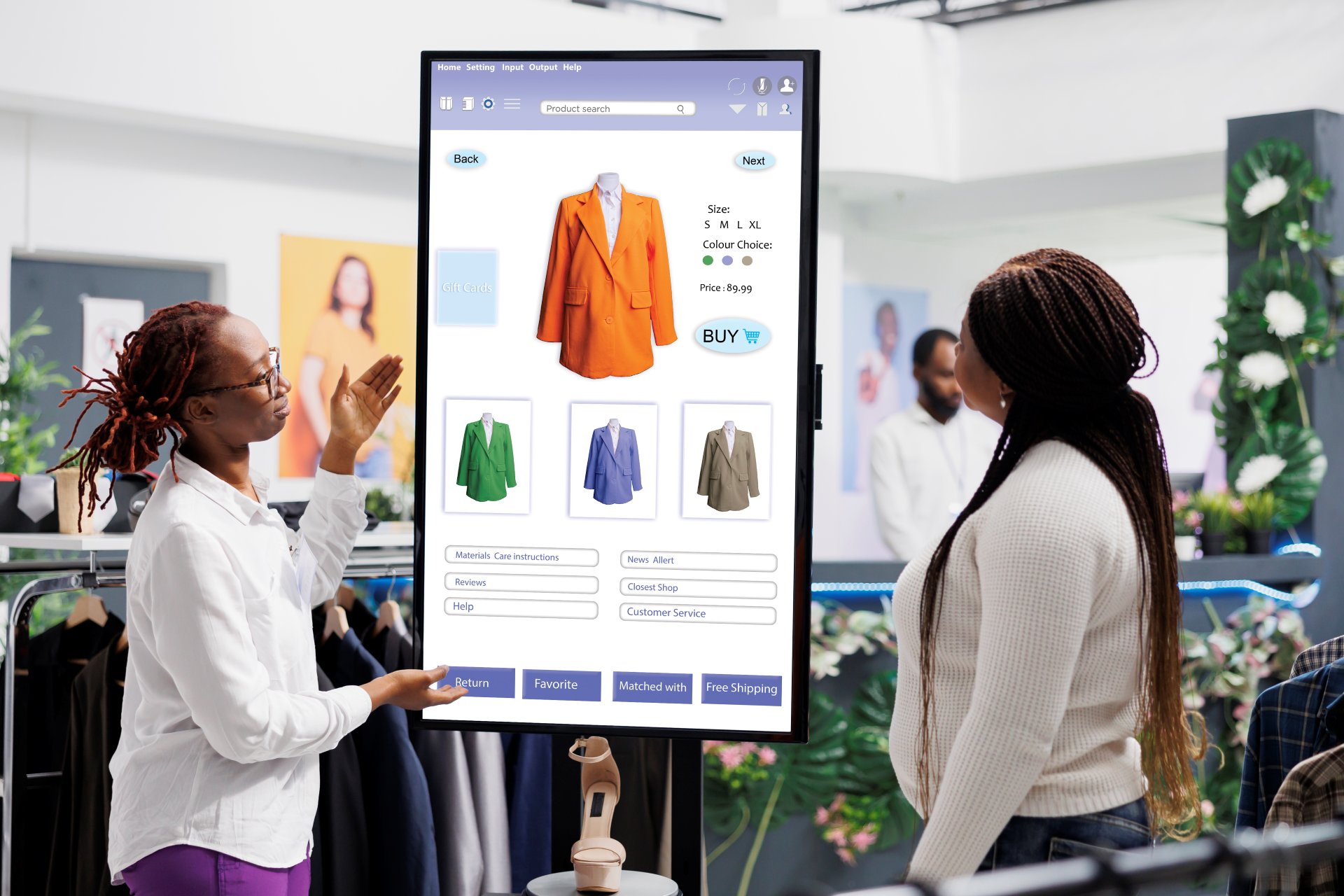
Real-time inventory management is not optional when 48% of shoppers use the store app while standing in front of the shelf. A four-hour lag between the warehouse and the app is a direct conversion killer.
The requirement here is event-driven: every movement and return must publish to a shared event stream that all consumer-facing systems subscribe to.
03. Headless Orchestration
Legacy retail stacks couple the customer experience tightly to the transaction engine. Changing what a customer sees in the app requires touching the same system that processes millions of daily transactions. This creates a choice between innovation velocity and operational stability – a choice retailers should not have to make.
A headless, API-first architecture breaks the coupling between the experience and the transaction engine. Front-end experiences call into a unified data layer that brokers requests to whichever back-end system owns that capability. This allows the customer journey to evolve independently from the stable transaction core.
A Practical Path: The "Sidecar" Modernization
The fear of a “Big Bang” replatforming—a multi-year project that disrupts daily revenue—is the primary reason retail transformation stalls. There is a safer, incremental alternative to building a unified commerce solution:
Step 1: Audit Your Integration Landscape
Most retailers lack an accurate map of where their customer data breaks down. Before investing in new infrastructure, the first step is a systematic audit of your existing landscape.
At Dualboot, we use 3PO. Our Silo Detective process ingests legacy codebases to map exactly where customer data is trapped, surfacing the “Ghost Logic” before it can sabotage your new systems. Surfacing these dependencies is the difference between a controlled migration and an unplanned crisis.
What the Audit Typically Uncovers The most common finding is that the majority of fragmentation is not caused by missing technology–it’s caused by undocumented integration contracts between systems that were never designed to communicate. Surfacing these dependencies before starting a modernization project is the difference between a controlled migration and an unplanned crisis. |
Step 2: Build a Unified API Layer as a Sidecar
Once you have a map of your integration debt, the path is not to rip out the core transaction engine. The goal is to build a high-speed middleware layer—a Sidecar—that connects your legacy backend to modern front-end experiences.
At Dualboot, we build this through DB90—an ecosystem that goes from architecture decision to a working unified commerce platform layer in 90 days. The result is a foundation that enables real-time customer recognition, unified inventory visibility, and personalized experiences at every touchpoint, without a multi-year replatforming program and without touching the core transaction engine.
Traditional Replatforming
18-36 month timelines before business value
High operational risk to core transaction systems
Requires freezing parallel development efforts
Business logic migration often incomplete
Sunk cost pressure leads to over-engineering
Sidecar Modernization (Dualboot)
First use cases in production within 90 days
Core transaction engine never touched
Teams continue shipping in parallel
Business logic mapped and migrated incrementally
Each phase delivers measurable business value
The Architecture of Winning
Retailers who move from fragmented architectures to a unified data layer see measurable shifts. The 56-point churn gap is closed by fixing the data layer, and the purchase rate lift becomes achievable when every one of your sales channels shares a live view of the customer.
of shoppers use the store app in-aisle
churn gap between unified and fragmented retailers
The retailers who will win the next decade are not the ones with the best app or the most sophisticated loyalty program. They are the ones who solve the infrastructure problem through a robust unified commerce solution. By solving “Customer Amnesia” at the architectural level, every touchpoint becomes an intelligent, data-driven opportunity.
Dualboot helps retail brands dismantle technical debt and build unified commerce foundations. Ready to find your silos?
Traditional Replatforming
18-36 month timelines before business value
High operational risk to core transaction systems
Requires freezing parallel development efforts
Business logic migration often incomplete
Sunk cost pressure leads to over-engineering
Sidecar Modernization (Dualboot)
First use cases in production within 90 days
Core transaction engine never touched
Teams continue shipping in parallel
Business logic mapped and migrated incrementally
Each phase delivers measurable business value


Related Posts