The Digital Rust Breaker: Why Your “Smart” Factory Is Trapped in a Legacy System Black Box


Manufacturing companies are investing billions in robotics, IoT platforms, and Industry 4.0 initiatives. New dashboards promise real-time visibility. Sensors generate torrents of data. AI-powered predictive maintenance is no longer theoretical—it’s expected.
Yet despite all this progress, many “smart” factories still operate partially blind.
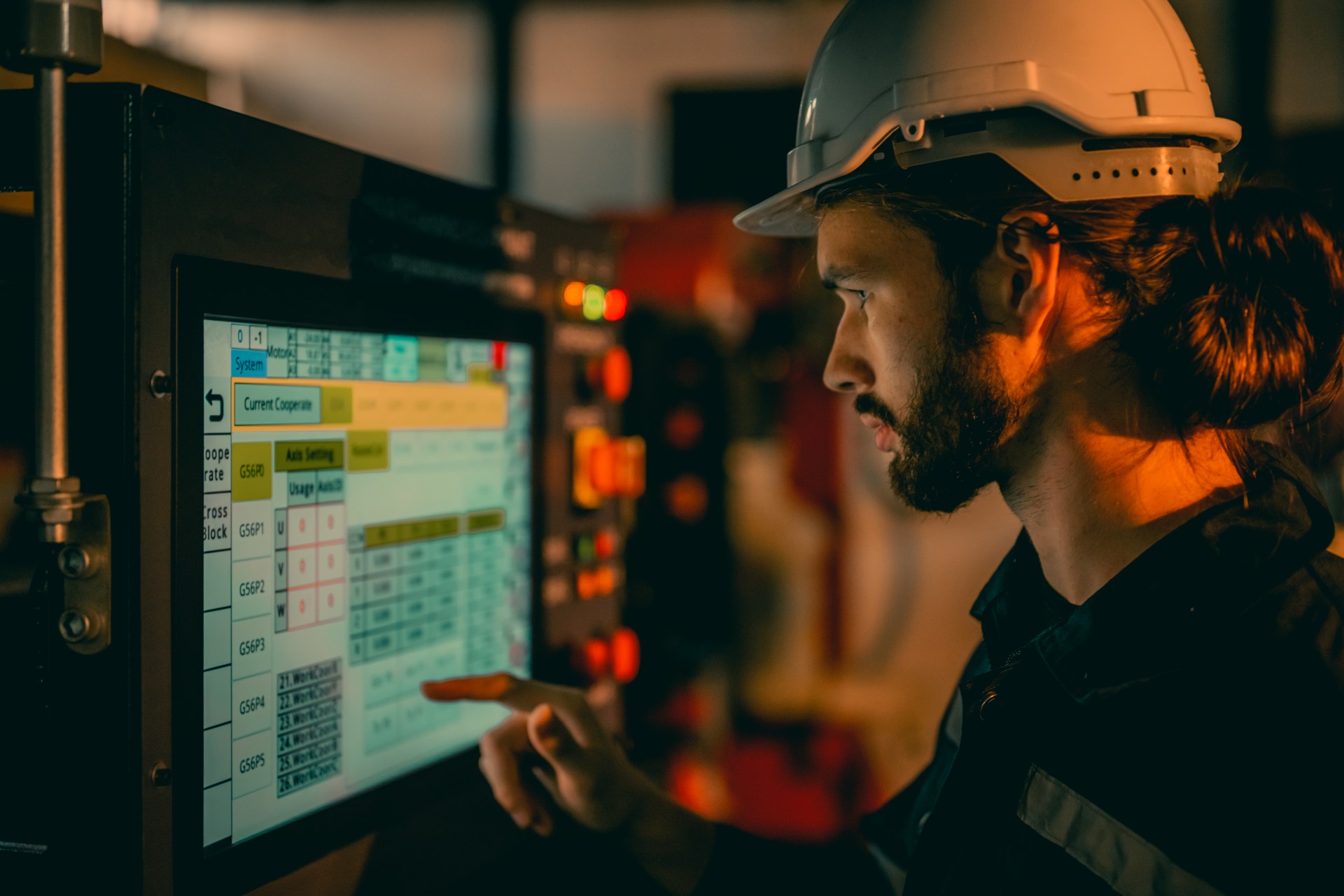
More than 50% of manufacturing facilities continue to rely on legacy automation systems—ERPs, SCADA platforms, and custom-built applications—that were never designed to communicate with modern cloud environments. These systems still run critical operations, but they trap data, hide business logic, and resist change. The result is a growing disconnect between intelligent equipment on the shop floor and systems of record that teams are afraid to touch. In fact, nearly 90% of organizations report operational inefficiencies tied directly to outdated legacy systems — a challenge at the heart of what we address in our manufacturing and supply chain practice.
This is what many manufacturers experience as digital rust: systems that technically work, but actively prevent insight, optimization, and AI-driven automation.
The Legacy Systems Black Box Problem in Manufacturing
Legacy systems are rarely broken. That’s precisely the problem.
Decades-old ERPs and SCADA environments often contain undocumented logic written in VB.NET, C++, or proprietary controller languages. Over time, the original developers leave, documentation disappears, and the system becomes a black box—critical to production, but opaque and risky to modify.
Maintaining these environments is costly and fragile. Legacy systems can consume more than 40% of IT budgets, while unplanned downtime caused by aging hardware and brittle integrations can cost manufacturers up to $260,000 per hour.
Teams know modernization is necessary, but the perceived risk is high:
Touch the system, and you might halt production
Replace it, and you risk months (or years) of disruption
Integrate with it, and you discover no clean interfaces exist
So transformation stalls. Dashboards get layered on top. Forms get digitized. But the underlying data remains siloed, inaccessible, and unusable for advanced analytics or predictive maintenance.
Why Digital Transformation Often Stops at the Surface
Many manufacturing digital transformation initiatives focus on visibility, not connectivity.
Adding IoT sensors or visualization tools may improve local awareness, but if legacy systems in manufacturing cannot expose clean, real-time data, organizations still lack a unified operational view. As a result, digital initiatives deliver incremental improvements while core inefficiencies remain embedded in the underlying systems.
This limitation becomes especially visible in efforts related to:
Predictive maintenance
Asset performance management
AI-driven process optimization
Enterprise-wide reporting
Digital transformation has the potential to help manufacturing companies improve efficiency, optimize costs, and bring new products to market faster. However, without reliable access to historical and real-time machine data, these initiatives struggle to scale—or fail entirely. Data remains fragmented across legacy ERPs, SCADA platforms, and proprietary systems, preventing teams from turning insights into action.
True Industry 4.0 outcomes require more than smart machines and modern dashboards. They require IT/OT convergence—a reliable way to translate operational data from legacy OT environments into modern IT platforms without disrupting the shop floor. Until that translation layer exists, digital transformation remains surface-level rather than structural.
Modernization Without Rip-and-Replace: Beyond “Just Adding Middleware”
The need for middleware and integration layers connecting legacy infrastructure to modern platforms is well-established across the manufacturing industry. Solutions including API gateways, cloud connectors, and integration platforms have proliferated in recent years. Industry standards like ISA-95, OPC-UA, and emerging Unified Namespace architectures provide frameworks for IT/OT convergence.
However, a critical step is often skipped: understanding what’s inside the legacy system before building the bridge.
Many prebuilt integration approaches assume accurate system documentation exists—or rely on surface-level “API wrapping” that exposes functionality without understanding the underlying logic, dependencies, or operational risks. In manufacturing environments where downtime can cost hundreds of thousands of dollars per hour, integrating blindly introduces unacceptable production risk.
Dualboot’s approach inverts the traditional sequence. Instead of building integration layers around opaque systems, we make the black box transparent first—then build connectivity with full knowledge of dependencies, constraints, and failure modes.
Dualboot’s Approach to Breaking the Black Box
Dualboot help manufacturers address system-level technical debt in two critical phases—clarity first, connectivity second. Strategic planning and close alignment with business goals ensure that modernization delivers measurable value without unnecessary risk.
1. Turning the Black Box Transparent with 3PO
While many tools exist for general software modernization or cloud migration, manufacturing environments present unique challenges. PLCs, SCADA systems, and proprietary controllers rely on specialized languages and protocols that general-purpose analysis tools don’t address. More importantly, they embed operational knowledge—the how and why of production—that generic documentation cannot capture.
3PO was purpose-built for manufacturing operational technology. It decodes not just code structure, but the operational intent embedded within legacy systems.
Instead of undocumented risk, teams gain a clear modernization blueprint:
What the system actually does
Where critical dependencies live
Which components can be safely extended or integrated
This shared blueprint creates alignment between IT and OT teams, reducing uncertainty and enabling confident modernization planning.
2. Building the OT-to-Cloud Bridge with DB90
Once the system is understood, Dualboot’s DB90 teams design and build the middleware and API layers needed to connect legacy PLCs, ERPs, and SCADA platforms to modern cloud environments.
This OT-to-cloud integration enables:
Real-time manufacturing data access
AI-powered predictive maintenance models
Reduced unplanned downtime without system replacement
For many manufacturers, this bridge is the missing link between Industry 4.0 ambition and operational reality.
Crucially, this approach is designed to complement, not replace, industry standards. DB90-built integration layers can expose data using ISA-95 object models, communicate via OPC-UA, and publish to Unified Namespace architectures. Rather than creating proprietary lock-in, the goal is to make legacy systems ‘standards-ready’—capable of participating in modern manufacturing data ecosystems while preserving their operational role.
In practice, technology is rarely the biggest barrier to IT/OT convergence. Organizational readiness—misaligned teams, unclear ownership, and change resistance—often slows progress more than technical limitations.
Dualboot’s approach addresses this by creating a shared understanding between IT and OT teams. The 3PO analysis phase replaces assumptions with a clear blueprint, making system dependencies, risks, and opportunities visible before any integration work begins.
Why This Matters: Downtime, Risk, and Missed Value
Unplanned downtime costs industrial manufacturers up to $50 billion annually, making it one of the most significant—and preventable—sources of lost value.
Predictive maintenance leverages real-time data and AI to monitor asset health, enabling manufacturing companies to reduce downtime by as much as 50%. Beyond improved reliability, the implementation of predictive maintenance also leads to lower maintenance costs, increased productivity, and more efficient use of skilled labor.
However, predictive maintenance is only as effective as the data behind it. Legacy systems that cannot communicate are not neutral—they actively block optimization and delay cost savings.
We’ve seen this firsthand. Dualboot helped Continental Tire modernize a legacy application used across 13 retread shops, transforming a system built on manual, opaque workflows into a modern platform with automated processes and clear operational visibility. The result was reduced downtime, lower maintenance costs, and measurable productivity gains—without disrupting production.
No rip-and-replace. No production risk. Just strategic modernization.
Breaking Digital Rust Without Breaking Production
Manufacturing leaders don’t need more dashboards. They need data they can trust, systems they can evolve, and modernization strategies that respect the realities of the shop floor.
Breaking through digital rust means recognizing that digital transformation is not just a technology initiative—it’s a path to sustained efficiency, cost optimization, and faster innovation. With the right approach, manufacturers can unlock predictive maintenance, reduce downtime, and build future-ready operations—without risking the systems that keep production running.
Want to explore what this could look like for your organization? Contact us
FAQs
How can technical debt be reduced in the manufacturing industry?
Technical debt in the manufacturing industry is reduced by making legacy systems understandable before attempting to modernize them. Rather than replacing stable systems or layering new tools on top, manufacturers can reduce risk by first gaining visibility into undocumented logic, dependencies, and data flows. Once legacy systems are transparent, organizations can incrementally modernize through middleware, APIs, and cloud integration, unlocking real-time data, improving maintainability, and enabling future innovation without disrupting production.
When should manufacturing companies prioritize reducing technical debt?
Manufacturing companies should prioritize reducing technical debt when legacy systems begin limiting visibility, scalability, or automation. Common signals include frequent downtime, manual workarounds, stalled digital transformation initiatives, or an inability to support predictive maintenance and analytics. Addressing technical debt early—before systems fail or modernization becomes urgent—allows organizations to reduce long-term costs, minimize operational risk, and modernize at a controlled pace.
Do legacy systems affect scaling in the manufacturing industry?
Yes. Legacy systems in manufacturing often become a major barrier to scaling. As companies grow, expand facilities, or introduce new technologies, outdated systems struggle to support increased data volume, integration requirements, and real-time decision-making. Without modern integration layers and IT/OT convergence, scaling introduces more complexity, higher costs, and greater risk. Modernizing legacy systems through transparency and connectivity enables manufacturers to scale operations while maintaining stability and control.


Related Posts