Unlocking Legacy System Visibility
with AI-Powered Code Analysis

Our client operates hundreds of veterinary clinics across the U.S., Mexico, and the U.K., delivering preventive care, diagnostics, surgery, and bundled wellness plans to pet owners nationwide. As part of a global consumer goods enterprise, they combine high-quality pet healthcare with a commitment to making care more accessible and affordable.
When the team set out to modernize their legacy systems, they hit a wall — not for lack of effort, but for lack of visibility.
The Opportunity
The client had spent over eight months and significant internal resources trying to manually document their legacy environment. Despite the investment, the initiative stalled before it could deliver what the team needed to move forward.
The core blockers:
- Incomplete system coverage Critical workflows and processes remained undocumented, creating blind spots across the entire architecture
- Unclear system dependencies Interconnected workflows weren’t mapped, making it impossible to assess migration impact
- Heavy reliance on tribal knowledge Key information lived with specific people, not in documented systems, creating bottlenecks and inconsistency
- Migration paused Without a complete picture of the existing environment, moving forward carried too much risk to justify
Without full system visibility, the path to modernization was blocked. Every delay increased costs, compounded technical debt, and put key digital initiatives further out of reach.


The Solution
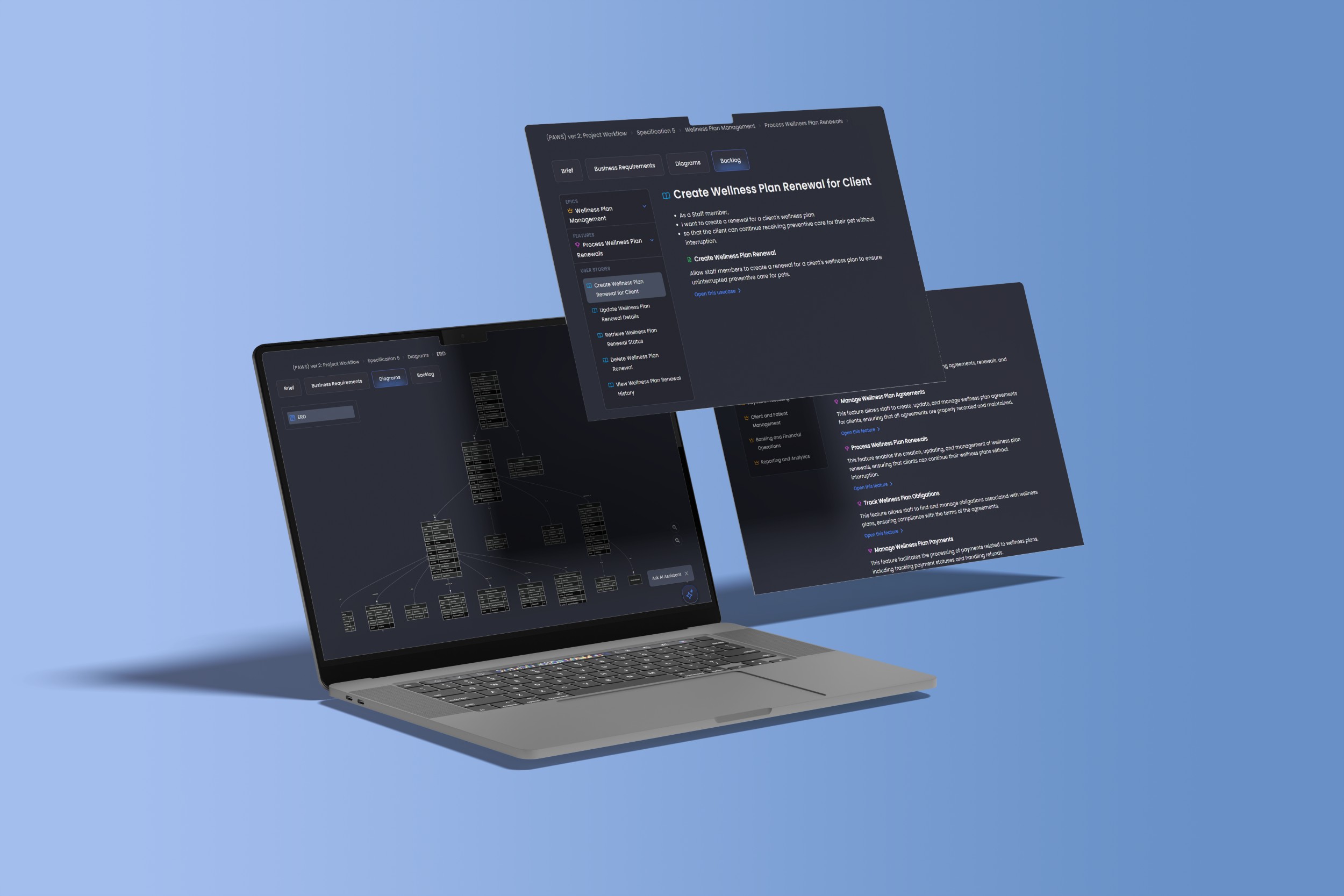
Dualboot introduced 3PO, an AI-powered code analysis platform, to do what months of manual work couldn’t: autonomously map the codebase, surface system dependencies, and generate structured, searchable documentation — all with a lean team, in under a month.
What 3PO delivered:
- Architectural overviews and workflow diagrams that made the full system legible for the first time
- Dependency maps that revealed how interconnected components interacted and where risks lived
- Risk identification across critical paths, system bottlenecks, and areas of technical debt
- Business-level outputs — epics, features, user stories, and use cases — that gave both technical and non-technical stakeholders a shared language to move forward
But visibility alone wasn’t enough. Throughout the engagement, Dualboot worked directly with leadership to interpret the outputs, prioritize risk areas, and translate everything into a migration-ready action plan — bridging the gap between technical clarity and business alignment.
The Impact
- Complete system documentation in under 4 weeks 5 epics, 40 features, 154 user stories, and 300+ detailed use cases
- 8x efficiency gain over a manual effort that ran 8+ months without reaching completion
- End-to-end system visibility that reduced migration risk and created a clear foundation for testing, development, and future improvements
- Previously unknown business risk uncovered within the existing application — a critical context that would have surfaced mid-migration otherwise