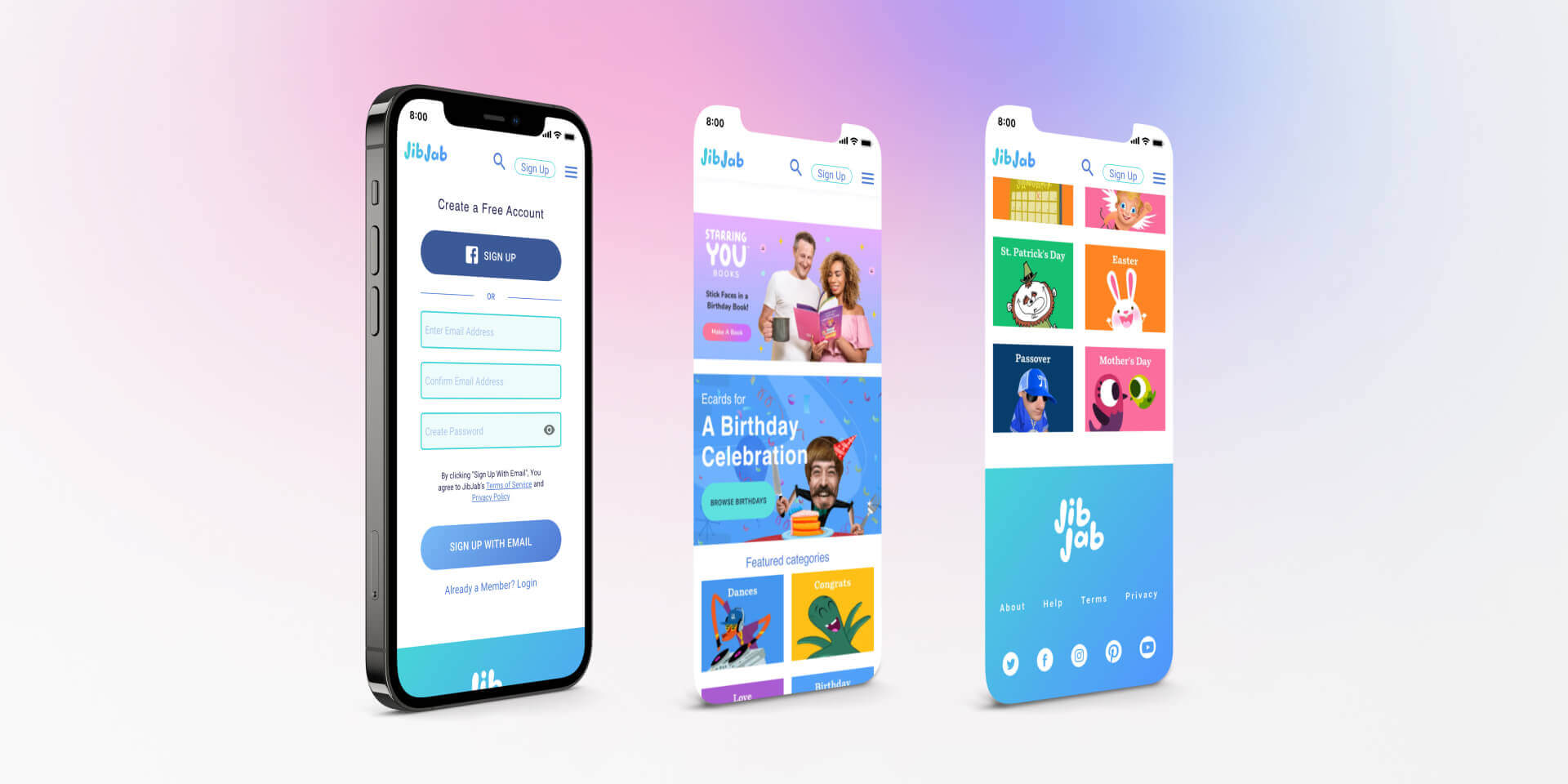
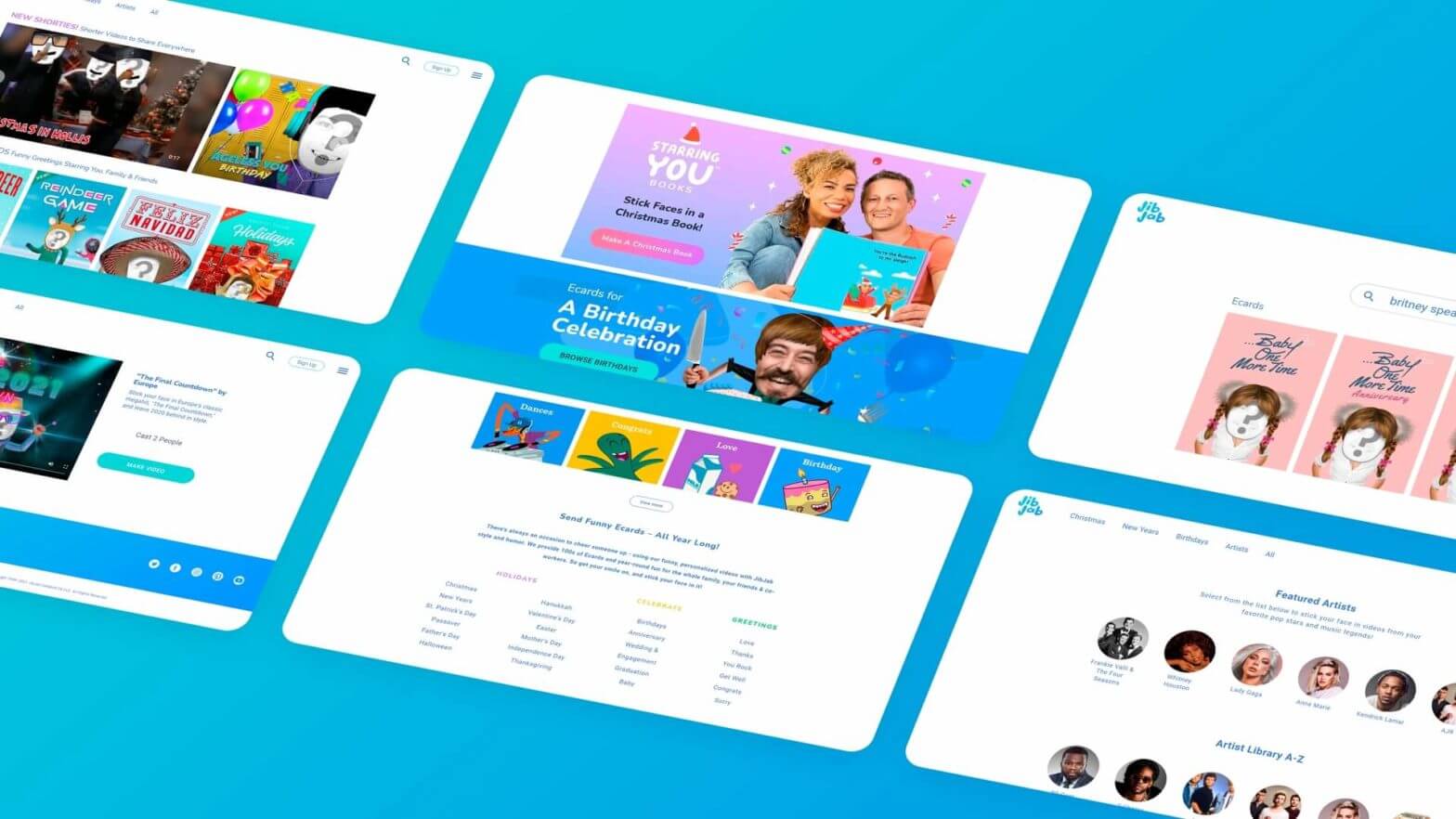
JibJab became Internet famous during the 2004 presidential election when it created an animated parody of the famous Woody Guthrie song “This Land is Your Land” using the faces (and platforms) of former President George W. Bush and former Secretary of State John Kerry.
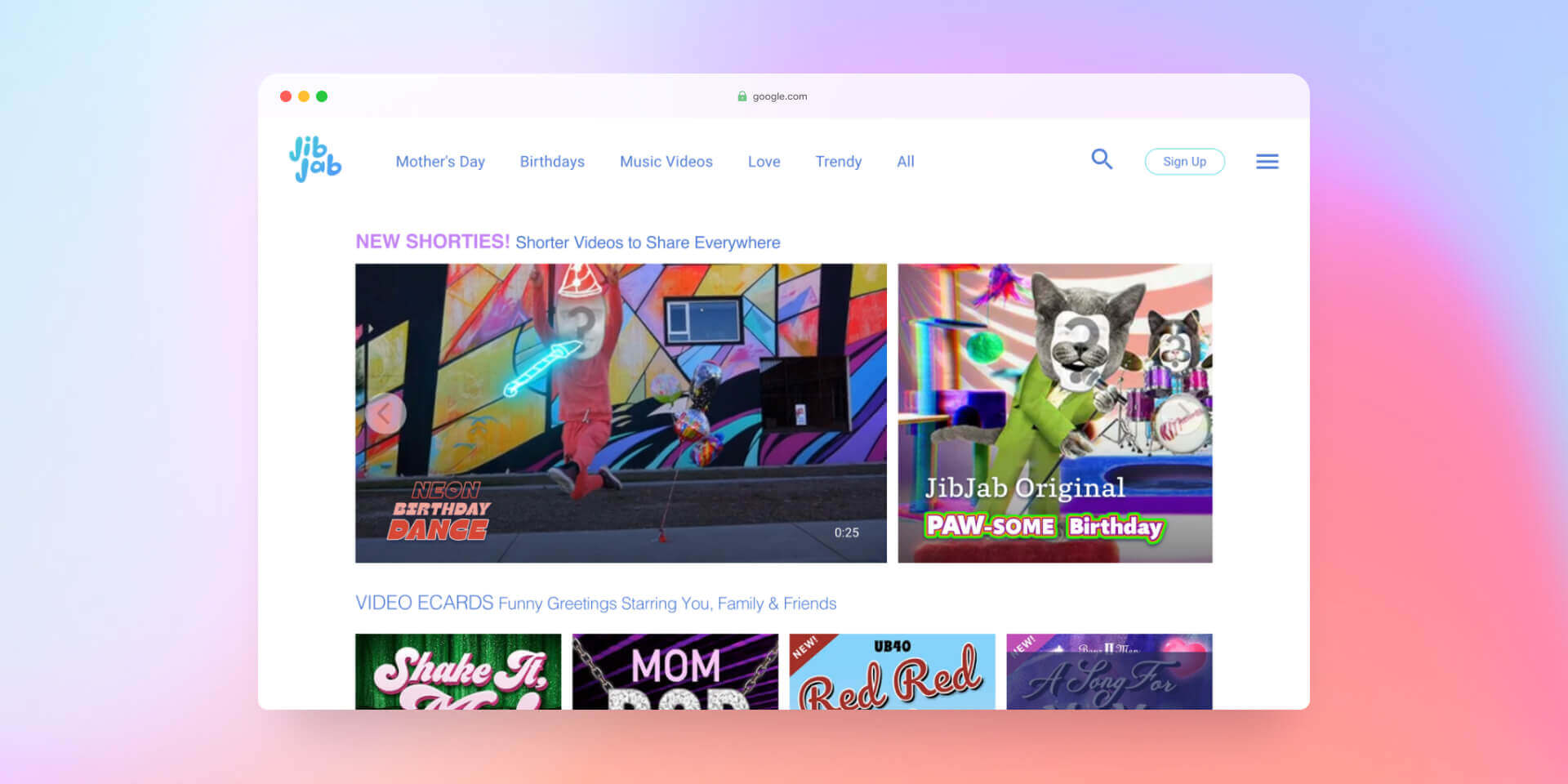
It spread via email, as was the primary means of digital content distribution back then, and it gave the company a solid foundation in the space they have occupied ever since: digital, personalized e-cards and content. If you want to send your friends and family hilarious, animated e-cards and videos, JibJab is your go-to destination.

Starring You Books had its soft launch earlier this year. But before that development work could take shape, JibJab’s internal development team had something else to accomplish: They wanted to rebuild the front end of JibJab’s website, taking it out of Ember and into React.
The purpose behind this was twofold: First, React is more adaptive, with more resources and community support behind it. Second — and most importantly — a transition to React would help JibJab attract and retain talent, since React is far more widely used than Ember. The company’s goal was to grow its team, and this was a necessary step in that process.
There was just one problem: JibJab didn’t have enough internal technical resources to execute the transition and keep tackling projects on its product roadmap.
Enter Dualboot Partners.
React soon became the more popular and adaptive option. While there may be one way to solve a problem in Ember, there are 25 solutions with React. And as the company looked to build out its engineering team, they were running up against a brick wall when prospective candidates learned they would have to know, or get to know, Ember as part of working at JibJab.
“We were really hurting ourselves top to bottom,” Cielecki said.
At the same time, JibJab’s product development roadmap was full, with projects company executives weren’t willing to sacrifice. One of those was an initiative called Face Organization.
The problem was, JibJab didn’t have enough technical resources in house to accomplish both the migration to React and the implementation of Face Organization. The company had a choice to make: It could choose one project over the other. It could build out its internal team to increase capacity. Or it could bring in an outside firm to facilitate the front-end stack migration while JibJab pushed forward on the roadmap.


“I think we could have still found good candidates without that transition, but I don’t know if they would have wanted to join us,” he said.
The partnership with Dualboot Partners also inspired JibJab when they began work on Starring You Books. Once again, the company had the same options: It could pause work on one project to shift resources to the new one. It could hire a new team. Or it could bring in a third party to support the project, which would allow them to get to market fast.
Once again, the third-party option won.